Koh Phangan - How crazy is crazy enough?

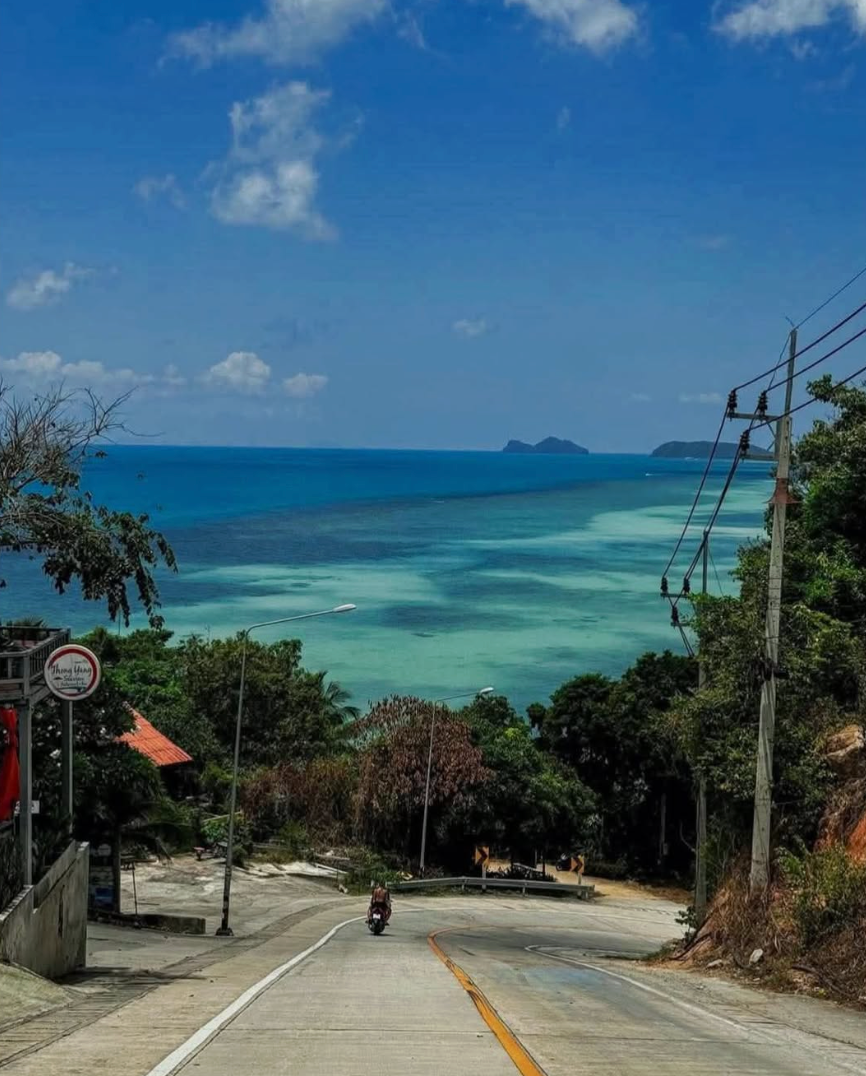
I don't know how to write this one. I have done enough of these now that I have a process: you observe, you note, you find the angle, you write. But Koh Phangan keeps slipping out of the frame. The best I can do is tell you what I saw and trust that you can feel the rest of it.
Getting there is the first decision. You can fly Bangkok to Surat Thani, take a bus to the pier, take the ferry. This is the cheaper, longer way. Or, if your relationship with money is more relaxed than mine, you fly direct to Koh Samui and take a fifteen-minute ferry across. The second option is faster and costs more and ends in the same place. Most people take the first. The ferry, regardless of which pier you board from, delivers you to the same realisation: this island is not what you thought it was.
The Infrastructure of a Good Time
Everything of consequence on Koh Phangan happens along a ring road that runs from the bottom-left of the island to the bottom-right. You do not walk this road. You ride it, on a scooter rented from somewhere between 200 and 250 baht a day depending on whether the full moon is approaching and whether the operator has assessed your negotiating energy correctly. There is no Grab. There is no Gojek. There is a scooter and there is the road, and within about four hours of arriving you will have achieved a level of comfort on that scooter that would alarm your mother.
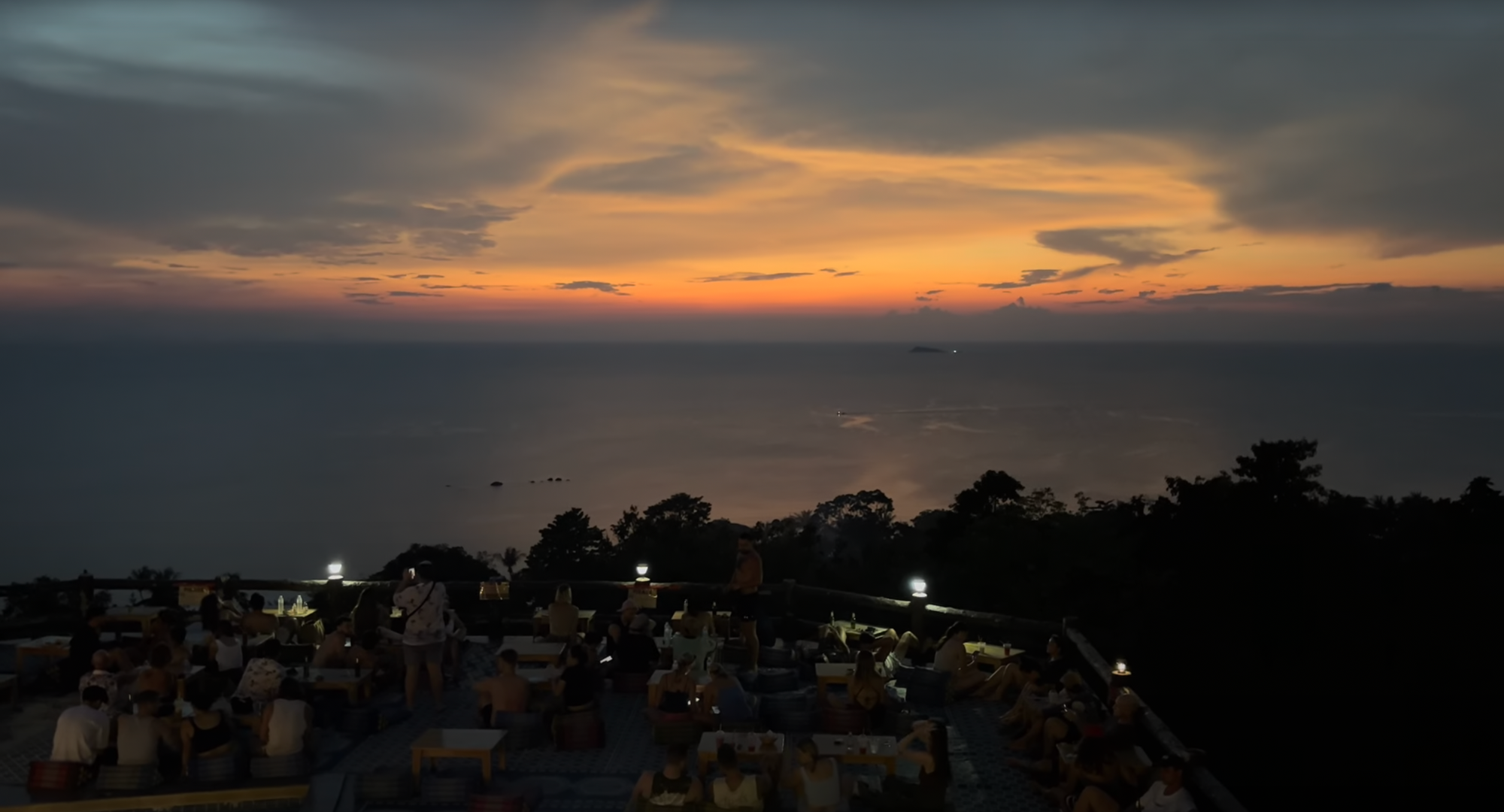
The road from the main town to Haad Rin is the one you need to take once purely for the experience of taking it. It goes up for a kilometre at a gradient that makes you question the scooter's commitment to the project, then down for a kilometre at a gradient that makes you question your own, and at the top of each rise, the Gulf of Thailand appears on one side or the other and you think: okay. This is why. Every kilometre or two there is a 7-Eleven, which in Thailand functions less as a convenience store and more as a national infrastructure commitment. You stop. You buy a cold drink. You get back on the scooter. The road continues.
By the numbers: The island is 168 square kilometres with a permanent population of around fifteen thousand. The full moon party months push visitor numbers to something that has stopped being comfortable for the infrastructure to accommodate, but the island absorbs it anyway, because the island has done this many times and knows what it is doing.
The Part Where I Have to Explain the Business Model
Here is the thing about Koh Phangan that I have not seen anywhere else, including places that are supposed to be the gold standard for this kind of thing. The Full Moon Party happens once a month. That is twelve times a year. Any reasonable island would organise its economy around those twelve nights and manage the rest of the month as best it could. Koh Phangan looked at that arrangement and decided it was leaving money on the table.
So they invented the Half Moon Party. And then, because the math still felt conservative, they engineered a pre-party ecosystem around each of them. Three days out from the half moon, you start seeing the crowd thin toward something. Three days out from the full moon, same thing. The jungle party. The waterfall party. Each one runs a thousand baht a head, redeemable inside, and feeds the current toward the main event. By the time the actual full moon party arrives, the island has been in a state of structured anticipation for the better part of a week.
Ibiza does something similar in concept: the summer season, the clubs, the weekly rotation of DJ residencies, the whole machine. But Ibiza is a city of a hundred and fifty thousand people with forty years of that infrastructure built in. Koh Phangan is an island of fifteen thousand people that decided, at some point, to think like a platform. The mechanism it created to ensure the city is thriving not once a month but six or seven days a month is one of the more elegant pieces of informal economic engineering I have seen. The tuk-tuks are busy. The shops are full. The 7-Elevens are running out of ice. Everyone is getting their money.
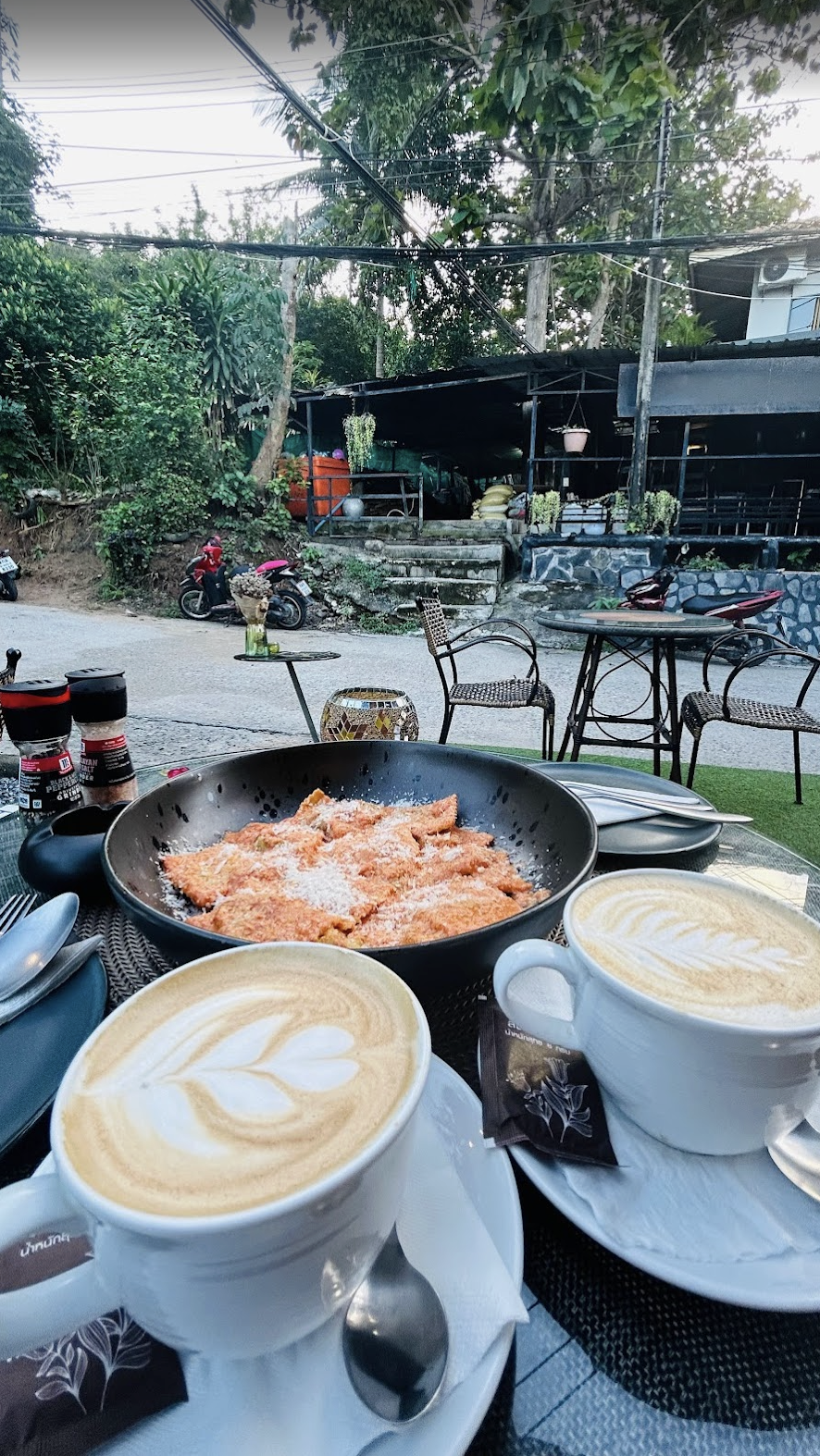
The Amsterdam Bar, on the west coast, does the best sunset on the island and also functions as a warm-up venue in the nights leading toward whichever party is next. You sit there and watch the sky do the thing the sky does over the Gulf of Thailand and you understand, for the first time, that the party is not just the party. The party is the whole week.
The Part That Made No Sense Until It Made Complete Sense
I did not see a police van once.
This is the detail that I keep coming back to. Koh Phangan, during full moon season, is an island running a twenty-to-thirty-thousand-person outdoor party in which a significant number of attendees are consuming substances that are illegal in most of the countries they came from. Weed. Shrooms. Things sold openly enough that the market has its own storefront logic. And the island, as far as I could observe, functions entirely without visible enforcement.
No bar fights that required intervention. No altercations that spilled from the party onto the road. No moment where you felt the evening tipping toward something that needed to be managed. In India, I have seen police stationed outside wine shops in cities of a hundred thousand people on a normal Tuesday, because something stupid was going to happen between people who all speak the same language and live ten minutes from each other. Here: people from thirty countries, multiple languages, substances everywhere, scooters on a mountain road in the dark, and somehow a functional social contract held.
The one-way street incident is the thing I keep telling people. There is a street somewhere in Koh Phangan that becomes one-way by collective agreement. No sign. No enforcement. Just the accumulated understanding of everyone who has driven it. I did not know this, drove it the wrong way, and was immediately shouted at by everyone in my vicinity. I took a U-turn and followed the correct direction. The people who shouted went back to whatever they were doing. The street continued to function.
This is not a small thing. This is a community of strangers, in transit, self-organising around a rule that nobody made official. I have not seen this work anywhere else.
The Party Itself
Haad Rin beach at full moon is not Instagram. It is denser than Instagram and louder than Instagram and the sand is not clean the way beach sand is supposed to be clean because thirty thousand people have been on it for six hours and some of them have made poor decisions about where to put their beer glasses. Wear shoes. I am saying this plainly and with the confidence of someone who has seen the alternative play out. Wear shoes.
The fire rope skipping, which you will see, and which looks remarkable in a video, claims a higher scar-to-attempt ratio than the content would suggest. It is good for the reel. It is less good for the leg. The alcohol is expensive relative to elsewhere on the island, which is why the 7-Eleven on the way in exists in the particular form it does. You can pre-game with the strategic intelligence of someone who has read this blog, or you can discover this yourself. Either is valid.
But. And this is the thing. There is a moment on that beach, past midnight, when the moon is directly above the water and you are standing in the Gulf of Thailand up to your ankles and the lights from the party are somewhere behind you and you think: this is genuinely, absurdly, unearned luck. That I am standing here. That this exists. That thirty thousand people and the full moon and the sea somehow add up to something that feels, against all reasonable expectation, like it means something.
I have been to parties. This is different in a way I cannot make technical.
The Other Half That Gets Ignored
The fitness community on Koh Phangan is real and it is large and it gets almost completely buried under the party coverage, which is a failure of narrative.
The early mornings on the island are populated by people running the beach roads, training in open-air gyms, doing things in the water that require both fitness and courage. The island has become, alongside Bali and a handful of other places, a genuine hub for digital nomads who stay for months and build a life around training and work and the particular freedom of a place where rent is low and the ocean is close. These are people who are fit in the way that suggests they have made it a project, not a coincidence. The island supports this ecosystem with the same quiet competence it applies to everything else.
The party island and the wellness island coexist on Koh Phangan without apparent friction, which is either a philosophical achievement or simply a function of scale. The island is big enough that both communities have their geography. The overlap is mostly at the 7-Eleven.
What It Is Actually Good For
Three to four days. That is the honest answer. The island gives you what it has to give in that window and after that you have seen the road, you have done the party, you have found the sunset, you have had the conversation with the person from somewhere you didn't expect at the hostel bar. There is a national park if you want to hike. There are beaches on the north coast that have not fully processed that tourists arrive this far. There is more, if you look.
But the island's real offer is not a list of activities. It is the tempo. The pace at which Koh Phangan runs is slower than whatever pace you arrive with, and it does not negotiate on this. By day two you are eating when you are hungry and sleeping when it gets dark and riding the scooter road to Haad Rin at dusk just because the view at the top is the kind of view you will not have a word for later but will spend a long time trying to find one.
I don't have the word yet. I'm still looking.