Spain: The Country That Let Me Exhale

Three Spanish cities, one medieval day trip, two football stadiums, one Holy Grail, and the slow, unglamorous business of learning to exist again.
"There is a particular kind of longing that covid left behind. Not for a person, not for a place, but for the version of yourself that existed before you spent two years being afraid. Spain did not return that version to me. It simply provided enough evidence that the world had continued, which, at the time, was sufficient."
The plane from Delhi broke through the clouds somewhere over the Arabian Sea, and I remember thinking, with a clarity that felt almost rude given how long it had been absent, that I had forgotten what forward motion felt like. Not metaphorical forward motion. The physical fact of going somewhere. For two years, the world had functioned like a film stuck on its opening frame, and the mental toll of that particular stillness is something no one adequately warned any of us about. This trip to Spain was not a vacation. It was, if one is being honest, an act of emergency.
Spain was the right choice for reasons I did not fully understand until I was already inside the country. It does not coddle you. It pulls you into its own rhythm, entirely indifferent to whether you are ready, and that indifference, after two years of anxious over-preparation, was the most therapeutic thing imaginable.
Barcelona, which does not entirely believe it is Spain
The flags appear early. Before you have properly oriented yourself, before the jet lag has fully resolved, you notice that Barcelona is flying something other than what you expected. The red-and-yellow stripes of Catalonia are everywhere, and the message is not subtle: this city is conducting an ongoing, low-key argument with the country it technically belongs to. Having spent a few days there, one understands the impulse. Barcelona does not feel like Spain the way Madrid feels like Spain. It feels like itself, which is a rarer and more interesting quality.
The vibe, to use a word that does not quite do it justice, is slower. More cultural. More personal. Barcelona is a city that seems genuinely interested in being lived in rather than merely occupied, and there is a warmth in its streets that reads less like civic infrastructure and more like a collective temperament. Families in the evening at Park Guell, which requires a small hike and rewards it with a flat summit and a view over the city that justifies every step. Old men on benches. Children running across the mosaic terraces while their parents ate something unhurriedly nearby. I watched all of this and felt, with some envy, that these people had access to a philosophy about time that most Indian cities have simply decided they cannot afford.
In Mumbai or Bangalore, the park is something you pass through on your way to somewhere that matters. In Barcelona, the park appeared to be the destination itself. That distinction is not small.
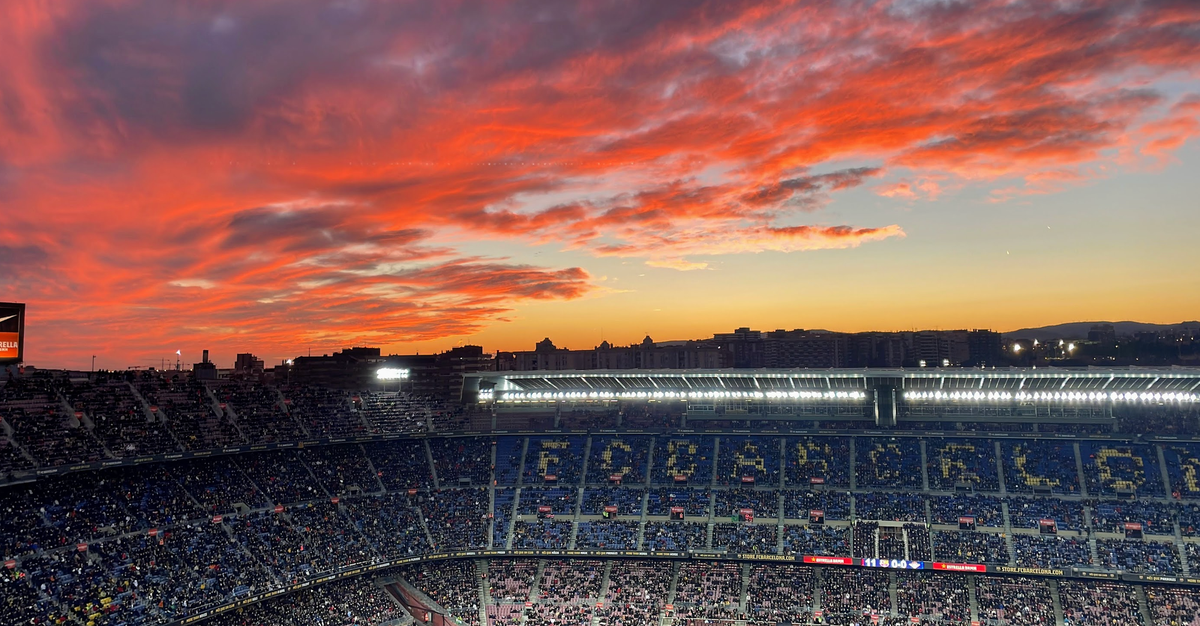
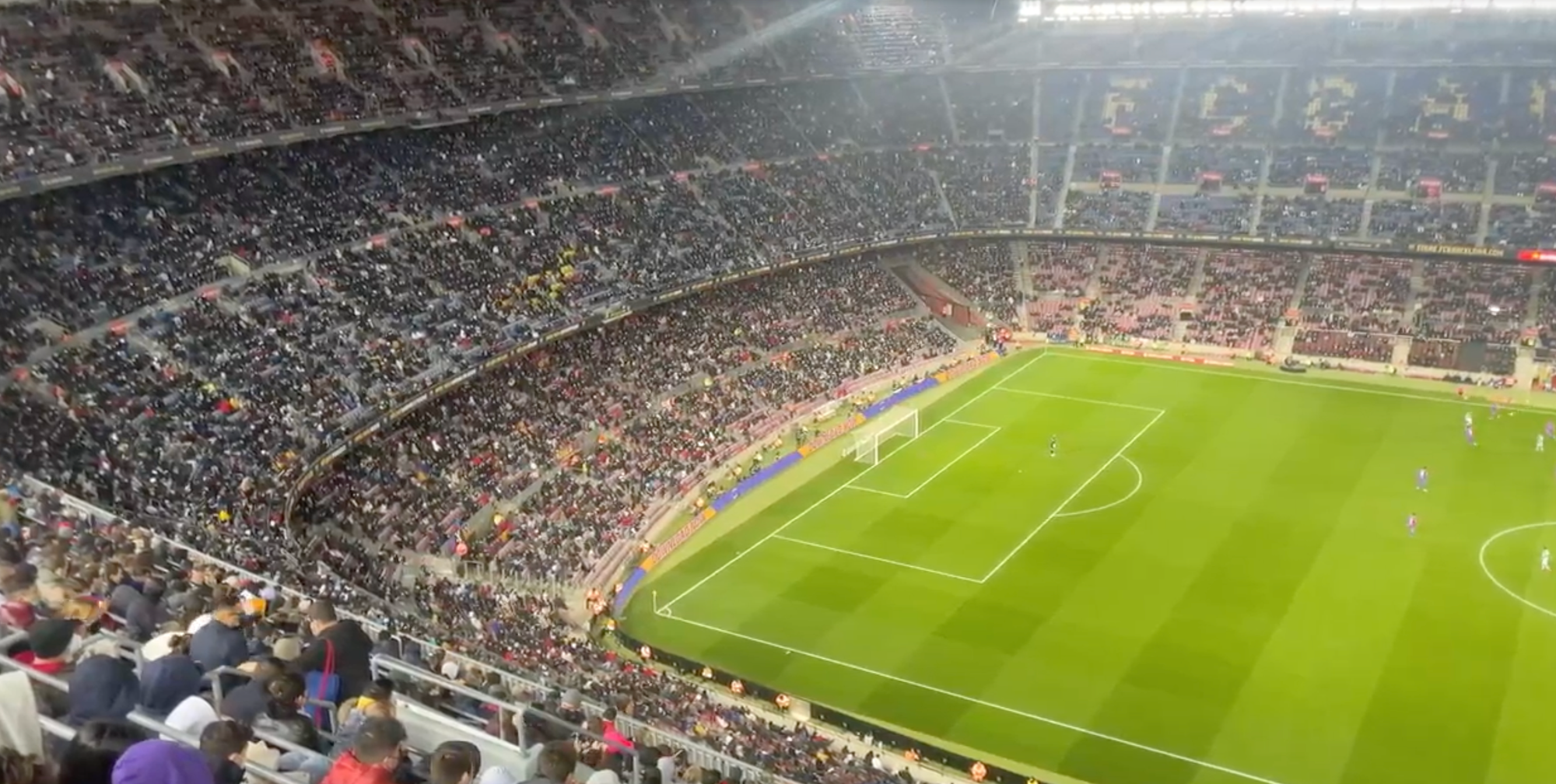
The Camp Nou deserves its own paragraph. It is old in the way that genuinely old things are old, carrying its age visibly and without apology. Barcelona were playing Real Betis the evening I attended, and the match was secondary, as it sometimes is, to the experience of being inside a stadium that has absorbed this much collective feeling over this many decades. Two old men were smoking cigarettes in their seats, which should perhaps have been shocking and was instead somehow perfect. Near our section, a Betis fan who had found himself in the wrong stand wore the specific expression of a man recalculating whether his life choices had been sound. The passion of a Barcelona crowd is not loud in a generic football-crowd way. It is particular. It has texture.
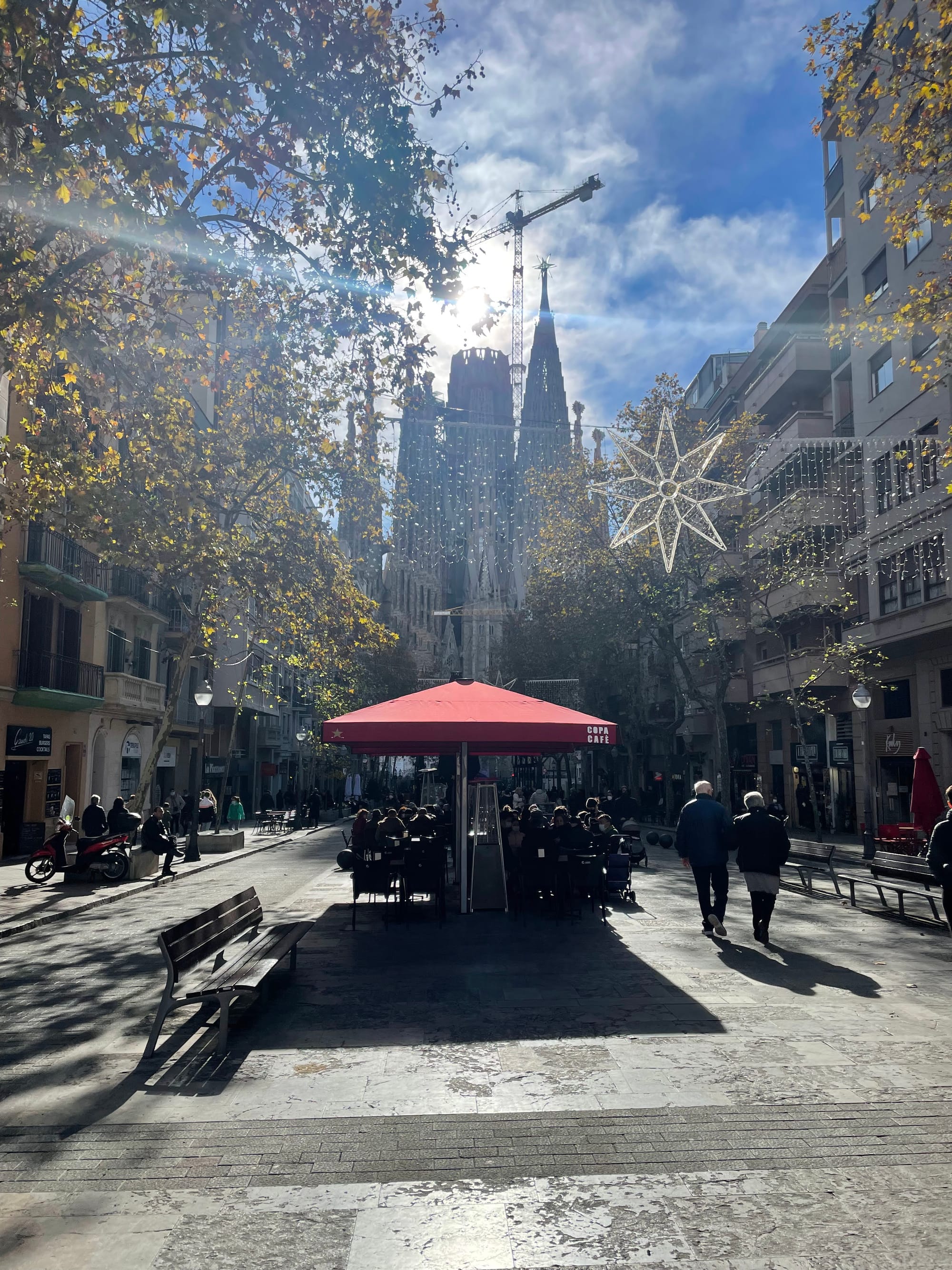
Then there is Gaudi, who is less an architect than a recurring condition the city seems to have contracted and chosen to celebrate. His fingerprints are on so much of Barcelona that to list the sites feels redundant. The Palau Guell. The park. The Sagrada Familia, which earns its own treatment. The hype around it is so enormous, so relentlessly sustained, that the rational response on arrival is to brace for disappointment. The building does not disappoint. It does something stranger: it justifies the hype, which is perhaps the more difficult achievement. Standing inside it, the light fracturing through the stained glass into colours that no photograph has ever adequately captured, I thought about heritage and what we owe it. About the Taj Mahal, the Red Fort and the gap between what they are and the condition in which they are kept. About what it means to decide that a place is worth protecting with the full seriousness that implies. Spain, at least in this, has understood something we are still working out.
One small, unexpected revelation: Google Maps knows the bus timings. The bus timings. I stood at a stop in Barcelona, opened my phone, and the next bus arrived at precisely the moment the application had promised. This is a minor thing. It is also, for anyone who has spent time navigating Indian public transit, a genuinely moving experience.
Girona, which is small and knows it and is entirely unbothered
A day trip from Barcelona by train, roughly an hour, deposits you into a town that has no particular interest in performing its charm for you. Girona simply is what it is, which is medieval and colourful and cobbled and, for significant portions of the day, rather crowded with people who have come to stand where Cersei Lannister once stood.
The Game of Thrones connection is real and the cathedral steps, where key scenes from the series were filmed, carry a specific quality that locations of beloved fiction always carry in person: the slight vertigo of a place existing in two registers simultaneously, as itself and as something you have already seen hundreds of times on a screen. I will not pretend the theme music did not play, unbidden, somewhere in the back of my head. It did. It was not unwelcome.
What the television cameras did not adequately convey was the colour of the houses along the river. Ochre and rust and faded terracotta, crammed together in the narrow way that only genuinely old towns manage, the kind of density that looks accidental and is in fact the accumulated result of centuries of people deciding to stay.
By six in the evening, the day-trippers were gone. The last trains back to Barcelona had been found and boarded, and Girona was returning to itself. The narrow lanes leading up toward the cathedral, which during the afternoon had been shoulder-to-shoulder with people holding phones aloft, were now quiet enough to hear footsteps on the cobblestones. A handful of locals moved through the streets with the ease of people in a place that belongs to them again.
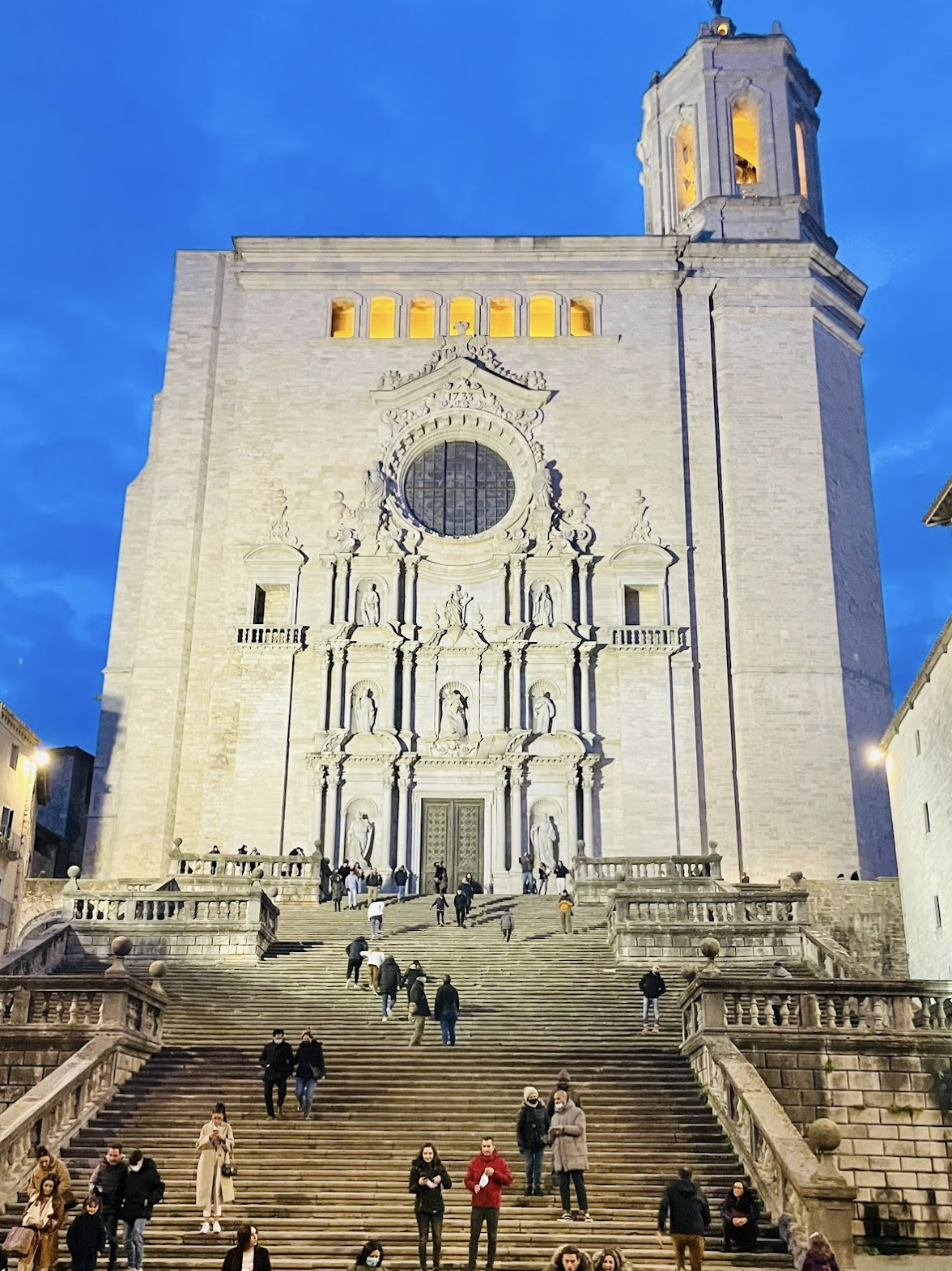
I sat outside a small coffee shop with a clear view of the cathedral facade and drank something I no longer remember the name of. What I remember is the quality of that particular stillness, the light fading, the town settling back into its ordinary self, and the feeling that arrived without announcement: that this, precisely this, is what travel is actually for. Not the monuments or the stadiums or the museums, though those too. The moment when a place stops performing for you and you stop performing for it, and something genuine passes between you instead. I have chased that feeling in many cities. In Girona, on a weekday evening with a cup of something warm, I found it sitting quietly at an outdoor table, waiting to be noticed.
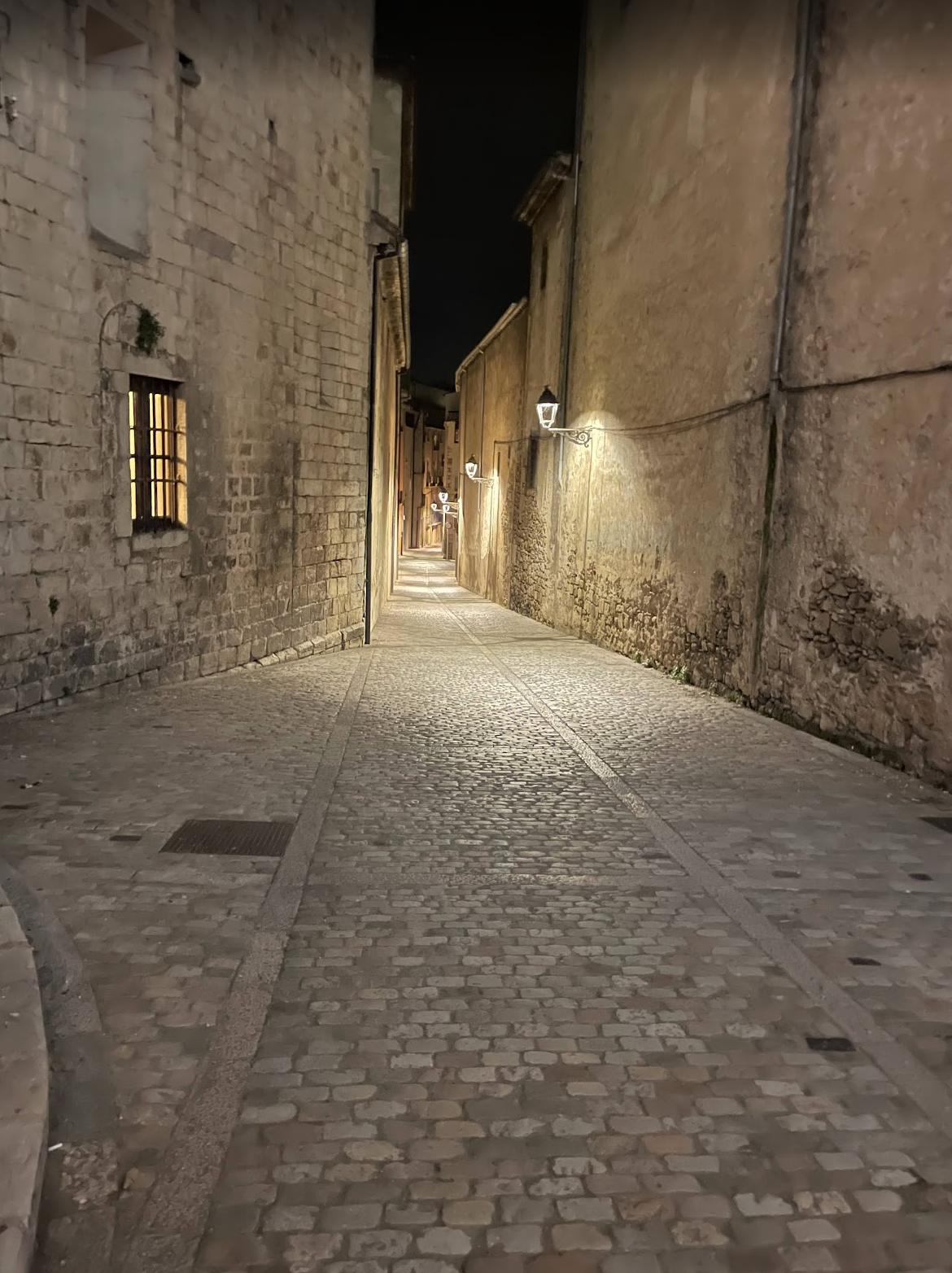
Girona also holds a mirror up to something uncomfortable about tourism closer to home. The town survives significantly on visitors, and the small shops selling artifacts and local goods along the tourist corridors are doing exactly what their counterparts in Rajasthan or Varanasi do. The difference, and it is a meaningful one, is the absence of pressure. Nobody followed me down a lane. Nobody insisted I enter a shop I had not chosen to enter. Nobody revised their price three times in ninety seconds. The transaction, when it happened, was direct and final and left both parties without the faint bad taste that aggressive tourist-economy hustling invariably produces. I am not saying one approach is culturally superior. I am saying one approach made me want to come back.
Madrid, which is unambiguously a city of the world
Madrid announces itself differently. Where Barcelona is personal and particular, Madrid is global and confident, and there is a kind of relief in that shift. Skyscrapers. Multiple airports, which is a detail that sounds prosaic but communicates something real about the scale of the place. The feeling of a city that has decided it is a significant node in a larger network and sees no reason to be modest about it.
It was also, in late autumn, noticeably colder than the coast. Barcelona's warmth had been partly literal, a function of its position on the Mediterranean, and Madrid's chill felt like a tonal shift as much as a meteorological one. The city is more serious. More formal. Less interested in seducing you than in simply existing at a high level and allowing you to appreciate that if you choose.
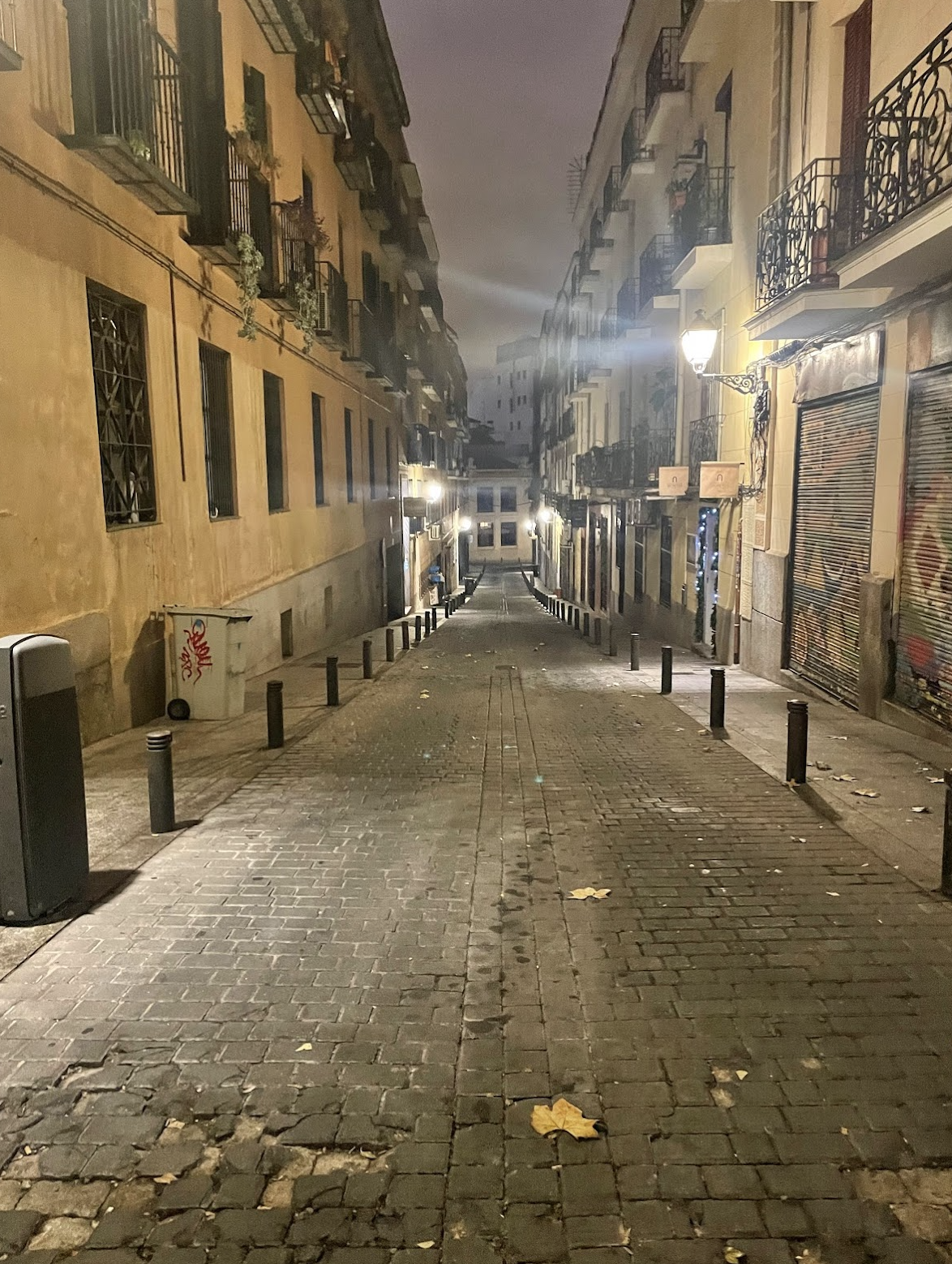
The Estadio Santiago Bernabeu was under renovation when I visited, which meant some portions were closed and the full theatre of the place was unavailable. This was, objectively, unfortunate. The UEFA Champions League match it hosted, Real Madrid against Inter Milan, was not. There are things one puts on a list in childhood and then carries for decades, not quite believing they will be resolved. Watching a Champions League match at the Bernabeu was on my list. It has now been resolved. The feeling of that resolution, the specific relief of a dream met rather than deferred, is something I had not anticipated being so physical in its effect.
Madrid walks. This is not a trivial observation. The city is designed for it, and its people have taken the design seriously in a way that their fitness levels make unmistakably evident. I found myself thinking, slightly absurdly, that an Adidas store in this city would have no philosophical difficulty whatsoever.
The Museo del Prado and the Reina Sofia between them constitute an argument that painting is one of the serious things humanity has managed. The Goya rooms are not comfortable. They are important. Las Meninas, which one has seen reproduced so many thousands of times that the original feels almost theoretical, turns out to be entirely real and entirely worth the silence people fall into in front of it. Art experienced in person rather than through a screen operates on the nervous system differently. This is obvious. It remains surprising every time.
Tapas in Madrid tasted, if one is being precise, somewhat like pakoras. The comparison is affectionate. The intention behind the food, small things designed for sharing, eaten slowly with something to drink, in the company of whoever you are with, is not so different from what good street food at home is also trying to do.
Valencia, which held the unexpected things
Valencia was the afterthought that became the centre of gravity. I had planned it because the train connections were convenient. I stayed because the city earned it.
It occupies a middle position that is genuinely its own rather than a compromise. Old-world charm coexisting with visible development, a coastal city that has not yet decided to trade its character for its real estate value. The riverbed-turned-park running through the city, with Calatrava's structures gleaming white at its edges, is one of those pieces of urban planning that makes you briefly optimistic about cities as a form.
The Cathedral of Valencia contains, according to the faithful who fill its nave with considerable conviction, the Holy Grail. The actual cup from the Last Supper. I am not in a position to adjudicate this claim, and I would suggest that adjudication misses the point. What I witnessed was a city that believes it, or chooses to believe it, which in matters of faith is the same thing. A ceremony was underway when I entered. The choir was singing. People were kneeling. The religious intensity in that space was complete and unperformed, and it challenged a comfortable assumption I had carried without examining it: that the West is secular, that faith belongs to us in the East. The woman kneeling two rows ahead of me had not received that memo. Faith, it turns out, is a human habit rather than a regional one.
The Valencia Oceanarium is one of those places that makes you briefly mourn the particular shape of your own childhood. Our school excursions went to factories. A dairy plant. A biscuit manufacturer. The intent was educational. The experience was not. Watching Spanish schoolchildren press their faces to the glass at fish they could not name but clearly needed to see, I thought about what it does to a child to be shown that the world is larger than they imagined.

In the evenings, Valencia drinks coffee outdoors. This is not remarkable in isolation but becomes meaningful as a pattern, the specific culture of people choosing, consistently and without apparent urgency, to sit outside with something warm and do nothing particular with it. It is a counterprogram to the logic of productivity, conducted with the quiet confidence of people who have decided the counterprogram is correct.
Two observations from Spain that I did not expect to make. The first: people chew tobacco here, openly and without shame, as a straightforward consequence of strict indoor smoking restrictions. In India, tobacco chewing is a class marker, looked down upon by people who have decided it is unsophisticated. In Valencia, a man in a good jacket was doing it outside a church without self-consciousness. The moralising, it turns out, was always more about social performance than health. The second: everything closes by six. The markets, the small shops, the places that in an Indian city would be hitting their commercial peak at precisely this hour. Europe has decided that the evening belongs to something other than commerce, and it enforces this with a consistency that initially feels inconvenient and eventually feels like a civilisational argument worth taking seriously.
What Spain gave me, ultimately, was not escape from the post-covid version of myself. There is no geography for that. What it gave me was evidence, accumulated across four cities and several weeks, that the world had continued without my participation during the years I had spent being frightened inside it. That beauty had survived. That choirs were still singing. That families were still hiking to the tops of parks on weekday evenings to watch the light change over the city.
But the truest thing I can say about the trip is also the simplest. It happened in Girona, at an outdoor table, with a cup of coffee going cold in my hands and a cathedral filling the frame in front of me, after the tourists had left and the town had gone quiet. Nothing was happening. Nothing needed to. And in that nothing I understood, with a completeness that surprised me, exactly why we do this. Why we board planes and take trains and walk down cobbled lanes in cities we do not know. Why we follow film locations and stand in football stadiums and sit in cathedrals where the choir is singing something we do not understand. It is not information we are after. It is not even experience, exactly. It is the dopamine of arrival. The irreplaceable sensation of being, for the first time, somewhere. No screen mediates it. No algorithm curates it. It lands directly, and it lands hard, and there is genuinely nothing else in ordinary life that produces it at quite that voltage.
I came home tired in the body and quiet in the head. For anyone who has spent two years being the opposite, that is an excellent trade.