Lightning & Thunder. In Praise of the Second Best Thing in the Room !

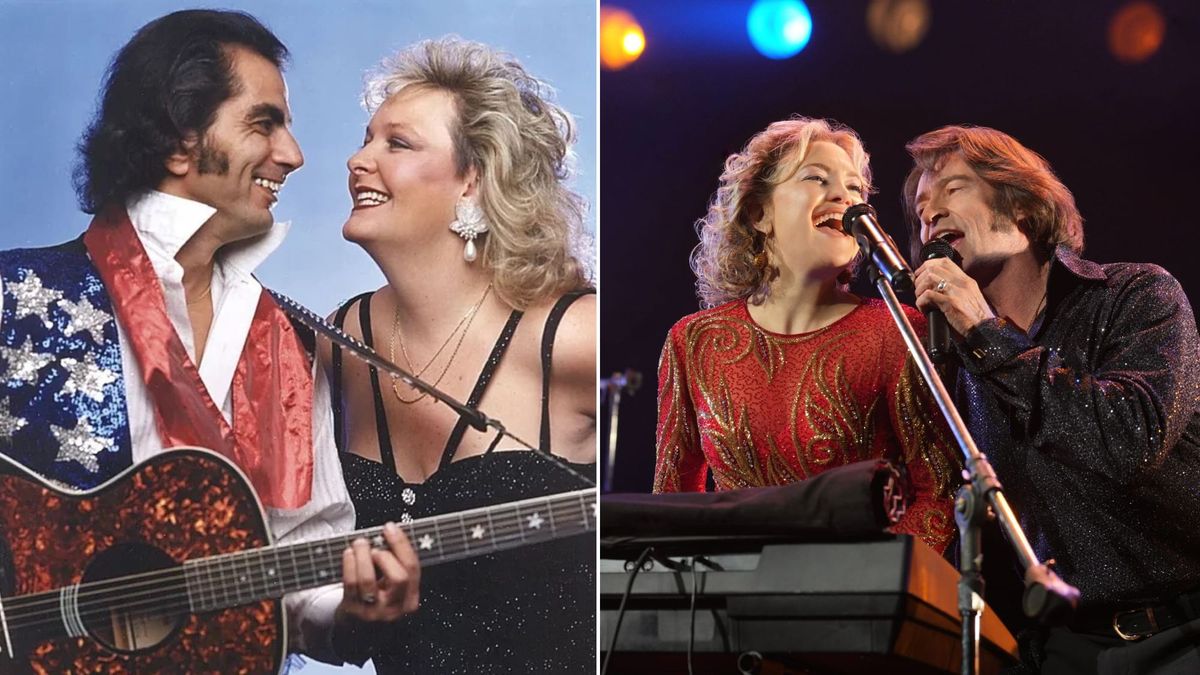
There is a moment in Craig Brewer’s Song Sung Blue, somewhere between the sequinned jumpsuits and the dive bar fistfight, where you realise you are not watching a film about Neil Diamond at all. You are watching a film about the people who carry a famous man’s music from the Wisconsin State Fair to a Pearl Jam stage in Milwaukee, and who never once pretend to be him. Mike and Claire Sardina, performing as Lightning and Thunder, are explicit about it. Not a tribute band. A Neil Diamond experience. The distinction sounds like a press release until you sit with it for two hours and realise the distinction is actually the whole movie.
Hugh Jackman is the reason the distinction lands. After two decades of being marched out in adamantium claws every time a studio needed a quarterly result, watching him do something this small is a relief that borders on the medicinal. There is no franchise here. No multiverse. No fan service. Just a Vietnam veteran with twenty years of sobriety, a leather jacket two sizes too tight, and the unshakeable conviction that Cracklin’ Rosie is a song worth living for. Kate Hudson is the unexpected revelation, finally given a role that lets her do more than smirk through a romantic comedy, and the two of them generate the kind of chemistry that makes you forgive the film its occasional dream sequence and its 131 minute runtime.
But the piece I keep returning to, days after the credits, is the philosophical question the movie raises without ever quite asking it out loud. What does it mean to spend your life being a vessel for someone else’s genius?
A short tour of the imitation economy
Start with Elvis, because he is the largest single employer of dead celebrity labour on earth. Pete Vallee, who has been performing in Vegas lounges for years, has estimated that at the industry’s peak there were twenty to thirty thousand Elvis impersonators working across America once you include the weekend warriors. In Las Vegas, a working Elvis can pull six figures. The 2022 attempt by the Presley estate’s licensing company to stop Vegas wedding chapels from using Elvis was so threatening to the city’s two billion dollar wedding industry that the Clark County Clerk publicly worried it might destroy a portion of it. Graceland Wedding Chapel was performing 6,400 Elvis themed weddings a year. The man has been dead since 1977. He still has more active fan clubs than any other celebrity on the planet, last counted at over 480. He is, as one writer put it, the greatest job creator not alive.
Then Charlie Chaplin, who has been dead since 1977 too and somehow employs hundreds of people in the same way. Billy Scadlock works the Florida theme parks. Steven Kirk has been doing Chaplin for over twenty five years across film, print, and corporate events. There is a man in the UK who arrives at your wedding in greyscale, walks like the Tramp, and teaches your guests the waddle. There are agencies in Las Vegas with a thousand impersonators on file. None of these people are Chaplin. All of them are why your nephew, born sixty years after The Great Dictator, knows what a bowler hat and a cane mean.
Then Michael Jackson, whose afterlife has its own peculiar twist. Navi Charles spent over twenty years as the world’s leading MJ impersonator, performing in 150 concerts across seventy countries. The strangeness is that Jackson himself recognised the resemblance was so total that he hired Navi as a decoy to throw off paparazzi. The impersonator was not just keeping the legacy alive. He was, occasionally, the legacy itself.
Then the Beatles, where the imitation economy is so deep it has its own internal hierarchy. Rain played over 300 shows on Broadway. The Cast of Beatlemania has been working since 1980, longer than the original Beatles existed as a band. A successful tribute act, the lawyers tell us, can gross over ten thousand dollars a night during peak season. There are at least two dozen serious working Beatles acts on Wikipedia’s list alone, plus the regional weekend bands no encyclopedia bothers tracking.
Move out of music and the pattern repeats with the same eerie consistency.
In comedy, the entire impressionist genre is built on the same architecture. Rich Little, Dana Carvey, Darrell Hammond, Jay Pharoah, Frank Caliendo, Matt Friend. SNL has been a thirty year machine for turning twenty something mimics into household names. James Adomian got famous doing Bernie Sanders. Tina Fey got immortal doing Sarah Palin. The job, technically, is to be someone else for ninety seconds at a time. In India, Mubeen Saudagar built a career off mimicry on Comedy Circus. Mimicry Dayanand has been doing politicians and Kannada film stars since 1990. Johnny Lever, before he was Johnny Lever, was doing impressions of Bollywood stars at corporate events.
In film, the entire biopic industrial complex is essentially a high budget tribute act with awards bait attached. Rami Malek won an Oscar for being Freddie Mercury for two hours. Austin Butler got nominated for being Elvis. Cate Blanchett was nominated for being Bob Dylan. Hugh Jackman is now, by being Mike Sardina being Neil Diamond, performing a tribute of a tribute. The Indiewire review noticed this. The layers of imitation go deeper the longer you look.
In painting, the imitator becomes a different animal entirely. Han van Meegeren spent the 1930s and 40s creating Vermeers so convincing he sold one to Hermann Göring for what would today be roughly five million pounds. After the war he was arrested as a Nazi collaborator for selling Dutch national treasure to the enemy, and his defence was the strangest in art history. He proved he had painted the Vermeer himself, in court, to escape the treason charge. He was hailed briefly as a folk hero, the man who duped the Nazis, before dying of a heart attack during sentencing. Wolfgang Beltracchi, working with his wife Helene, forged hundreds of paintings in the style of Max Ernst, Léger, Campendonk, and Derain across forty years, netting over one hundred million euros before a single titanium white pigment finally gave him away in 2010. Mark Landis, an American with mental health struggles and exceptional technical ability, donated forged Picassos and Hartleys to museums for decades and was never charged with anything because he never took a dollar for them. He just liked being treated like a benefactor. Michelangelo, in 1496, faked a Roman antique Cupid by burying it in acidic soil and selling it. The money helped fund the early career of the man who would go on to paint the Sistine Chapel.
The lesson across all of it is that imitation is not a marginal economy. It is one of the largest unspoken industries in culture. It crosses art, music, comedy, weddings, theme parks, biopics, and the auction houses of Geneva. And in every domain the same question hangs in the air, unasked.
The harder question
Is choosing this life a quiet admission of defeat? Is the tribute artist accepting, somewhere in the small hours, that they will never write the song, only sing it? That they will never paint the Vermeer, only fake it? That they have settled for being a custodian of someone else’s largeness?
The romantic answer is no. The honest answer is that it depends entirely on the night.
The market is brutally clear about what happens when these acts try to leave the imitation lane. It almost never works. There is a structural reason for this. Audiences come to a tribute show with a contract already signed. They want Sweet Caroline. They want Hey Jude. They want the wedding sing along, the lighter in the air, the moment they remember being twenty two. The minute you announce that the next song is one you wrote yourself, the contract breaks. The room cools. The bartender starts wiping glasses. One musician on a forum put it cleanly. Writing a song makes you an artist. Covering a song makes you a performer. The audience paid for the performer. The artist they did not order.
The same is true for impressionists who try to become straight comedians, art forgers who try to sell their own original work, and biopic actors who try to play someone other than the historical figure they nailed. Rich Little had a career. He did not become Robin Williams. Van Meegeren’s authentic paintings, the ones he made under his own name before the Vermeers, are now in the same museums as his forgeries. The forgeries draw the crowds.
The exceptions, where they exist, prove the rule. The tribute acts that do break out tend not to break out with original material. They break out by going theatrical. Rain went to Broadway. Beatlemania the musical, the 1977 production that started most of this, was the original cover band reframed as theatre. The escape route from the tribute circuit is not authorship. It is spectacle.
What the imitator knows
Which brings us back to Mike Sardina, in his sequinned jumpsuit, in a biker bar in Wisconsin, getting into a fistfight because somebody insulted Neil Diamond. The Variety review of Song Sung Blue calls the film a faith based movie, which is exactly right, only the faith in question is not religious. It is the faith that loving something completely, with no irony and no ambition to ever surpass it, is a perfectly noble way to spend a life.
The original artist made the thing once. The imitator makes it again, every Friday and Saturday, in front of a crowd of two hundred people who paid forty dollars and a babysitter to be there. The wedding singer in Indore belting Forever in Blue Jeans at 11pm. The Chaplin at a Lions Club gala in Jacksonville. The MJ at a corporate party in Mumbai. The Elvis officiating a wedding at Graceland Chapel for the 6,401st time this year. One of these is a creative act. The other is a creative act repeated for forty years in a sequined jumpsuit, and there is a real argument that the second is harder.
Song Sung Blue is not a perfect film. The Indiewire review is right that it is overstuffed, that the dream sequences belong on the cutting room floor, that the soap opera occasionally tips into something Walk Hard would have parodied. But the film gets the central thing exactly right. Mike and Claire are not failed musicians. They are successful something elses, a category the culture has not bothered to name.
The thunder needs the lightning. The lightning needs an audience. And somewhere in the middle of all of it, across every continent and almost every art form, is a quiet army of people in costumes carrying the work forward, telling a room full of strangers that this song or this painting or this voice saved their life, and meaning it more than the person who made it ever could.
That is not mediocrity. That is service.
Go watch the film. Then notice, the next time you are at a wedding or an auction or a comedy club or a theme park, how many people in the room are quietly making a living off someone else’s genius. Most of them are doing it for love. A few of them are doing it for money. All of them are doing the same thing, which is the thing the culture forgets to call beautiful.