The Most Important Thing I Learned at AWS Was How Senior People Write.


Not the scale. Not the ambition. The discipline of sitting alone with a hard question and forcing yourself to put it into sentences. That is the part that stayed.
Working inside AWS introduced me to a lot of genuinely impressive things: the infrastructure of the organisation, the ambition of what was being built, and the investment the company made in its people. Among those investments, at least at the time I was there, was the practice of flying every employee at L4 and above to the annual gathering in Las Vegas. Whether that practice continues in its original form, I cannot say with certainty; organisations at Amazon's scale evolve their programs constantly. But the principle it represented, that senior people should be brought together to calibrate around a shared direction, was very much real. And it was not the most important thing I took away from my time there.
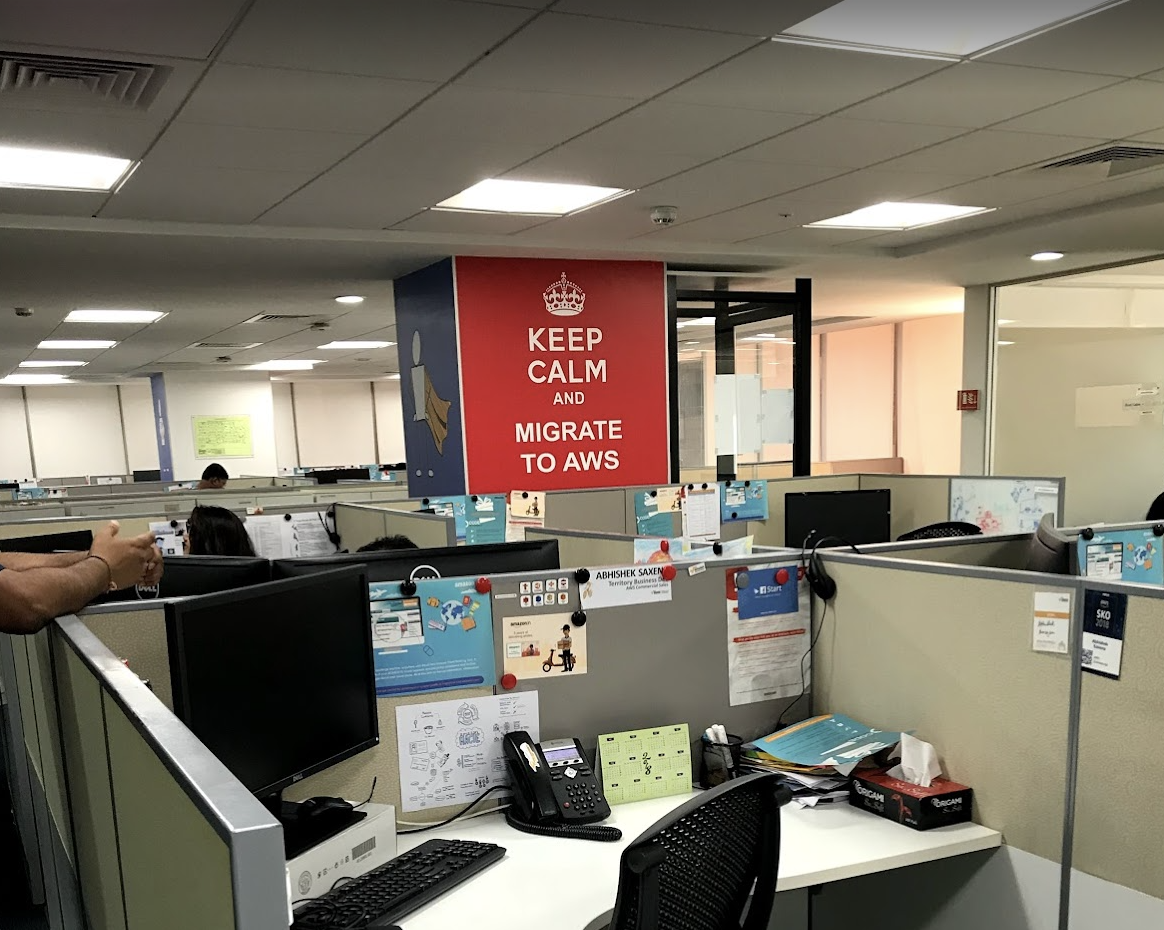
The thing that actually stayed with me happened in the rooms, not at the event. It was in the operating rhythm of how Amazon ran its internal meetings, in something I watched senior management do that I had simply never seen done at the same level of discipline anywhere else. They wrote. Properly. Long-form, sequentially argued, fully formed prose. Not slides assembled by a team, not bullet points handed off to be formatted. Real documents that could survive a careful, sceptical reader in the author's absence. Every important meeting began in silence. Everyone read. Then they talked.
At the time, I found it unusual. I now think it is the most instructive professional practice I have ever observed up close, and the reason has everything to do with what writing actually does to the person doing it.
"I write because I don't know what I think until I read what I say."
Flannery O'Connor
Writing as a mechanism for forced introspection
There is a concept I want to name directly here, because I think it is the heart of why this practice works and why it is so rarely replicated: forced introspection. Not the voluntary kind, where you journal when the mood takes you or reflect when circumstances allow. The kind where the structure of the task gives you no escape. The kind where, whether you want to examine your own assumptions or not, the act of writing sentences that have to connect to other sentences makes you do it anyway.
Concept: Forced introspection
The condition created when writing for an audience requires you to examine your own thinking whether you intended to or not. Unlike voluntary reflection, it is triggered by the structure of the task itself, not by the writer's willingness.
Writing a serious document about a strategic question you believe you already understand is one of the more quietly humbling experiences available to a senior professional. You begin with the conviction that you know your position. Then a sentence refuses to connect to the next one. A claim sits there demanding evidence that you realise you do not actually have. An assumption you have been treating as settled turns out, when you try to articulate it, to have gaps you had never noticed. The document becomes, without warning, a mirror. And the reflection is not always what you expected.

This is writing, doing something quite different from communicating. It is debunking your own myths. The ideas that felt clear in conversation, in a meeting room where your authority filled in the logical gaps, turn out on the page to be less complete than you had assumed. That discovery is uncomfortable. It is also irreplaceable. There is no other professional practice that produces it as reliably.
Flannery O'Connor understood this at the level of craft: she wrote because she did not know what she thought until she read what she said. Paul Graham, who has thought as carefully as anyone about the relationship between writing and ideas, observed that a good writer does not transcribe thoughts that already exist fully formed. The discovery happens in the writing itself. There is no substitute for it. What Amazon built into the operating system of its senior leadership was this exact mechanism, institutionalised and made non-negotiable.
"A good writer doesn't just think, and then write down what he thought, as a sort of transcript. A good writer will almost always discover new things in the process of writing."
Paul Graham, Y Combinator
The question this raises for every other company
I left AWS with this observation intact but without a fully formed theory for it. It was only later, spending time inside organisations at a different stage of the journey, that the implications sharpened. Startups approaching the five hundred million dollar mark, companies that have recently closed a significant funding round and are building toward scale: these are environments where execution is rightly treated as the primary currency. Speed matters. Getting the product out matters. The idea that a senior leader should spend two days writing a six-page document before a strategy meeting can feel, from the inside, like something only a company with Amazon's resources could justify.
But what I consistently saw in those faster-moving organisations was a different kind of cost, paid invisibly and over time. Senior management drifted toward keeping leadership satisfied rather than doing the structural thinking their level required. Strategy documents that were really just lists of initiatives with no articulated reasoning connecting them. Misalignment between teams that was not born of conflict but of the fact that no one had ever written down the actual logic of the direction. Founders so deep in daily operations that the long-term vision existed only as a feeling, something believed but never tested against the pressure of consecutive sentences.
The question is not whether these companies can afford the writing practice. The question is whether they can afford not to have the forced introspection that writing produces.
Research context
Global startup research consistently shows that strategic clarity correlates with higher performance and market valuation, particularly in resource-constrained environments. The discipline of writing does not merely communicate that clarity after the fact; it is frequently the mechanism by which clarity is produced in the first place.
The hiring question nobody asks
There is one dimension of this that rarely enters the public conversation about Amazon's memo culture. Amazon can mandate long-form writing at senior levels in part because it screens for the capacity to do it. The Bar Raiser program, in place since 1999, evaluates candidates at senior levels partly on their ability to think precisely and render that precision in writing. The capacity to construct a rigorous argument on paper is not assumed; it is tested. The writing standard at the hiring stage and the writing standard at the operational stage point at the same underlying capability. That consistency is not accidental.
Most companies approaching the five hundred million to unicorn threshold do not hire this way. They hire for domain expertise, for relationships, for executional track record. The ability to produce structured written thought rarely appears on the scorecard. This means that even a company that decided tomorrow to introduce a memo requirement for its senior team might quickly discover that the team does not yet have the habit of meeting it. The document would exist. The thinking would not necessarily follow.
The one thing AI cannot do here
This conversation has a newly urgent dimension. Writing tools are now capable enough that a senior leader who wants a polished strategy document can produce one without thinking especially hard about the subject. This defeats the purpose entirely, and it is worth being direct about why.
The memo was never primarily a communication artefact. It was a mechanism for the author to confront what they did not yet understand about their own position. The pressure of knowing that other senior people will read it with careful, critical attention is precisely what makes the forced introspection unavoidable. You cannot reach for comfortable vagueness when the audience is that specific. You are compelled to commit, to specify, to trace the logic. Outsourcing that writing removes the pressure and leaves you with a document that looks like thinking without any of its substance.
Using a tool to review a draft you have already wrestled with, to tighten the argument or challenge a weak section, is a different matter entirely. But the wrestling has to come first. The clarity has to be earned by the person who needs to have it. There is no shortcut to finding out what you actually think that does not involve sitting with the question long enough to write it out yourself.
What compounds quietly, and over time
The discipline of sitting alone with a hard strategic question and forcing yourself to put it into consecutive sentences does something to a leader over time that other habits simply do not replicate. It builds a preference for structural completeness. It trains the instinct to notice when a recommendation is floating without its supporting logic, when a vision statement is doing the work that an actual strategy should be doing, when a room full of people believes they are aligned because nobody has been forced to write down what they each actually mean.
For founders and senior operators at companies approaching real scale, this may be the most undervalued practice available. Not the six-pager as a meeting format, necessarily, but the underlying discipline: write the reasoning, not just the conclusion. Share it with people who will push back. Publish it internally so that everyone in the organisation understands not just what the direction is, but why. That transparency does something to a team. It replaces alignment by assumption with alignment by argument, and the latter is the only kind that holds under pressure.
The image I came home with from my time at AWS was a room of senior people reading in silence, and the understanding of what had to happen before that document reached the table. Not the spectacle. Not the scale. The unglamorous, irreplaceable work of writing down what you think, and finding out whether it actually holds. That is the part that compounds. That is the part worth stealing.