Singapore - The City That Figured It Out

On metro lines, bare chests at Marina Bay, housing that actually works, a wife with very good taste in shoes, and the one uncomfortable truth an Indian tourist must sit with.
The metro arrived on time. This is not a small thing. Anyone who has stood on a platform in Delhi, sweating through a shirt at 11 a.m., watching the estimated arrival time on the board flip from three minutes to five minutes to seven minutes for no discernible reason, understands exactly what I mean. Singapore's MRT does not do this. It arrives. It departs. The doors close with a quiet finality that feels almost philosophical. The city had announced itself before I had even stepped outside.
What struck me about the MRT was not just its punctuality but its architectural ambition. Stations like Bayfront feel less like transit infrastructure and more like the foyer of a serious building. Clean, cool, and signed with the kind of intuitive clarity that suggests the designers actually used the thing they were designing. Singapore's MRT carries roughly 3.5 million passenger journeys on an average weekday. It does so without visible distress.
By the numbers: Singapore's MRT network spans over 230 km across six lines, with trains running at peak frequencies of 2 to 3 minutes. On-time performance consistently exceeds 99%. The network is also the connective tissue of the housing story — more on that shortly.
Bodies at Marina Bay, on a Tuesday Afternoon
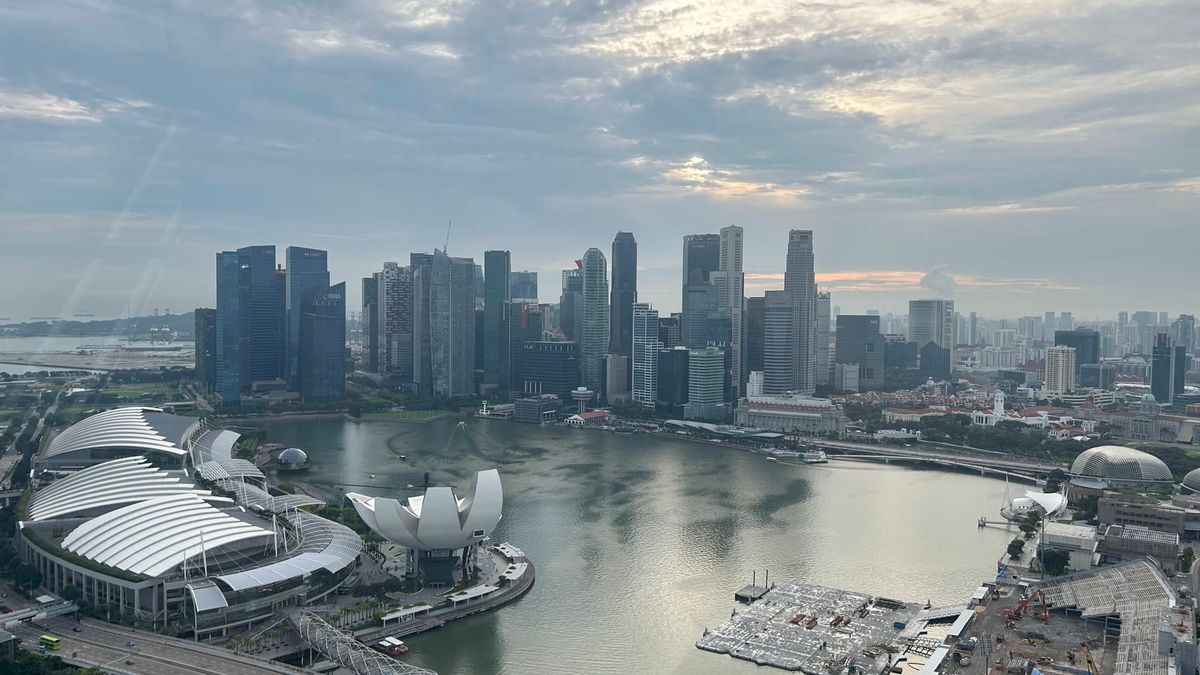
He ran past me with a whoop. Bare-chested, grinning, at something close to noon on a weekday, the heat did nothing to slow him down. He was not alone. The promenade at Marina Bay is populated at any hour by people who are conspicuously, cheerfully committed to the business of being well. Cyclists, joggers, and stretchers, the odd group doing what appeared to be a very earnest fitness class involving resistance bands. The instinct, for an Indian visitor, is to feel mildly embarrassed and then mildly inspired.
My hypothesis, walking away from the marina, was that Singapore carries less weight, as a nation, than most of its peers. The data is somewhat more complicated. Obesity rates in Singapore have been rising and currently sit at around 11.6% of residents as measured by BMI, with the government itself flagging the trend as a concern. But that number, set against the global context where obesity touches roughly 15% of adults worldwide, still places Singapore meaningfully below the global average. And crucially, the physical culture visible at street level feels real, not performed. The city builds infrastructure for movement, and people use it. The metro contributes to this: over 50% of total physical activity among residents comes from commuting. You walk to the station. You walk from the station. The city is your gym, whether you signed up for it or not.
The obesity data carries an important caveat: Indians and Malays in Singapore are three to four times more likely to be obese than their Chinese counterparts. The lean streets are not a uniform story. But the fitness infrastructure and culture of movement are, genuinely, city-wide.
Housing That Does Not Look Like a Problem
I have thought about housing a great deal in my life, mostly because in India, thinking about it is unavoidable. The gap between what cities promise and what they deliver on shelter is one of the defining anxieties of urban Indian existence. Singapore does not have this gap. Or at the very least, it has narrowed it so dramatically that riding through its suburbs on the MRT produces a strange, almost unsettling sensation: the feeling that things have been sorted out.
The Housing Development Board was established in 1960. Within three years, it had built 21,000 flats. Today, over 80% of Singapore's population lives in HDB flats spread across 24 towns and estates. More remarkably, about 95% of those residents own their flat outright. Singapore has one of the highest homeownership rates in the world, and a significant portion of that homeownership belongs to people who would, in other cities, be renters at the mercy of a market indifferent to them.
Yes, it is planned the way you are thinking it is planned. The HDB did not build housing estates. It built towns: each one with its own commercial centre, schools, parks, community facilities, and connection to the MRT. The design philosophy is explicit about income mixing. Different flat types are deliberately distributed across neighbourhoods to prevent the concentration of any income group in any single area. It is, by any reasonable measure, one of the most successful public housing programmes in human history.
"The suburbs did not look like a compromise. They looked like a choice someone had made on purpose."
My Wife and the Charles & Keith Problem
Charles & Keith is a Singaporean brand. This is information my wife had long processed and filed under the category of Things That Are Clearly Better At Source. She was, as it turned out, entirely correct. The prices were noticeably lower, and not merely because of sentimentality about origin stories.
Singapore runs a Tourist Refund Scheme that allows visitors to claim back the 9% Goods and Services Tax on eligible purchases above S$100 when departing through Changi. The effective saving, after administrative fees, sits around 7-8%. Stack that on top of lower base prices driven by minimal import tariffs, regional headquarters pricing, and the competitive retail market of a city that takes shopping seriously as infrastructure, and the arithmetic becomes compelling. Charles & Keith shoes can cost almost half the Indian retail price in Singapore. My wife did not come home empty-handed. I am choosing not to disclose the precise number of bags.
Changi: The Airport That Makes Airports Feel Apologetic
It has won the Skytrax World's Best Airport award thirteen times. In 2025, it also picked up awards for World's Best Airport Dining, World's Best Airport Washrooms, and Best Airport in Asia. That last one, about the washrooms, deserves a moment of reflection. No other airport in the history of the Skytrax awards had ever won it before. Singapore was given a brand new trophy category because no other airport had earned it.
The lounge experience sits in a different category from anything I had previously used as a reference point. The butterfly garden inside Terminal 3 is real. Jewel Changi, the nature-themed retail and entertainment complex attached to the terminals, recorded 80 million visitors in 2024. For a city of 5.9 million people, that is not a number that requires further comment. You do not pass through Changi Airport. You arrive at it.
Clarke Quay at Night, and the Productive Contradiction
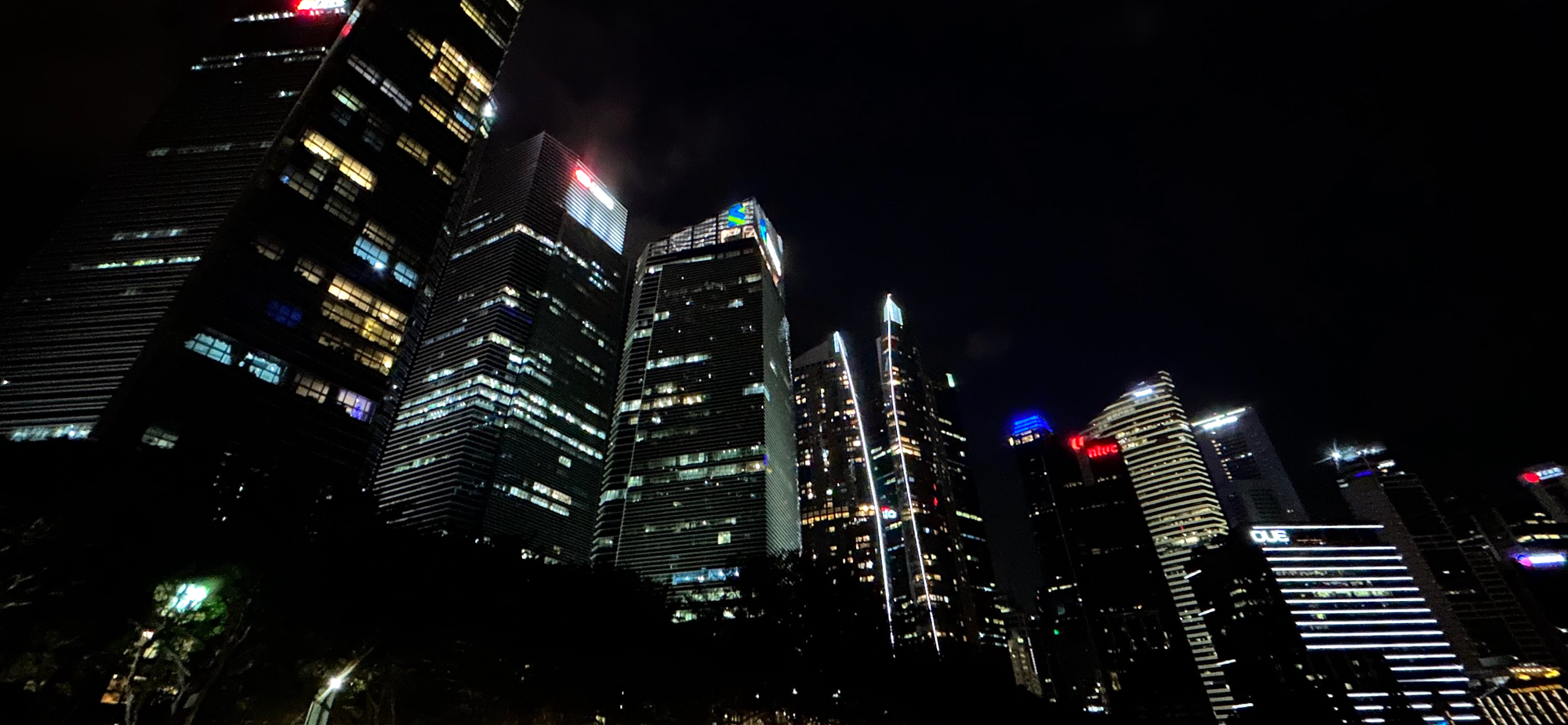
Singapore's reputation for strictness is well-earned and occasionally overstated. Clarke Quay, on a weekend night, is its productive contradiction: a riverside strip of bars, clubs, and late-night energy that would feel at home in any serious city. The counter-culture here is not underground. It has a real estate footprint and a liquor licence. Singapore seems to have decided that it can accommodate the chaotic end of nightlife without being defined by it. Whether this constitutes genuine social liberalism or simply very good zoning is a question the city seems cheerfully uninterested in answering.
The Uncomfortable Mile: Little India
I am going to say this plainly, because I think plainness is the only honest register for it. In a city that is clean to the point of self-parody, in a city that won a global award for its airport bathrooms, the one neighbourhood that looked worn and a little chaotic and not quite up to the standard of everything around it was Little India. And I am Indian. And I noticed. And I did not feel good about noticing.
This is not an observation about ethnicity. It is an observation about maintenance, about civic pride, about the relationship a community has with the physical space it occupies. Singapore has South Indians, North Indians, Tamil speakers, Hindi speakers, professionals and workers, all of them navigating a city that has set a very high bar for public space. Some of that bar is government-set. Some of it is cultural. The gap in Little India, relative to the rest of the city, suggests the cultural contribution is doing less work than it could be. I say this as someone who loves where he comes from and finds this uncomfortable to admit. That discomfort is, I think, worth sitting in.
The Tourist Density No One Talks About
Singapore is 734 square kilometres. In 2024, it received approximately 16.5 million international visitors. By tourist density, Singapore ranks fourth globally, receiving over 45,000 visitors per square mile — behind only Macau, Monaco, and Hong Kong, all of which are also, in their own ways, city-states or near-equivalents. For a sovereign country of meaningful size, there is a reasonable case that Singapore is the most visited place on earth per unit of land. It absorbs this traffic without appearing to notice. The streets do not buckle. The queues at immigration are not what you expect. The city handles density as a structural competency, not as a crisis to be managed.
For 2024 tourism receipts reached S$29.8 billion, a 9.6% increase on the prior year and 46.8% above the pre-pandemic peak. The average tourist spent approximately S$1,804 during their visit. Tourism is not an afterthought in Singapore. It is a designed outcome.
For the Children, Genuinely
Travelling with kids in most cities is an exercise in negotiation between what the city was built for and what children need. Singapore resolves this negotiation before you arrive. The MRT is clean, safe and navigable by a seven-year-old. The public parks are abundant and well-maintained. Sentosa Island is essentially a purpose-built argument for bringing children to Singapore. The hawker centres offer cheap, excellent food at child-friendly hours. The safety statistics remove a category of parental anxiety from the trip entirely. Singapore is not positioning itself as child-friendly as a marketing position. The infrastructure simply reflects a city that takes livability across all ages seriously.
What We Can Learn. What We Should.
I am not in the business of being hard on India. I love it with the particular, complicated love that comes from being of a place rather than just in it. But Singapore was once, as Lee Kuan Yew famously documented, a city with problems comparable to the developing world's worst. It chose, with sustained political will and institutional seriousness, to be different. The lessons are not secrets.
Public housing that treats dignity as a design requirement. Transit infrastructure that is built and then maintained, not just inaugurated. A relationship between government and civic space that assumes the citizen deserves excellence rather than tolerates inadequacy. A fitness culture that is incidental to a city that is built for walking. A tourist economy that is a product of quality, not just marketing. And, perhaps most pressingly for us, a relationship with our own diasporic spaces abroad that reflects something of our best rather than something of our most convenient.
The man with no shirt whooped again as I passed him on the promenade. I thought: what a city. What a strange, instructive, quietly extraordinary city.